
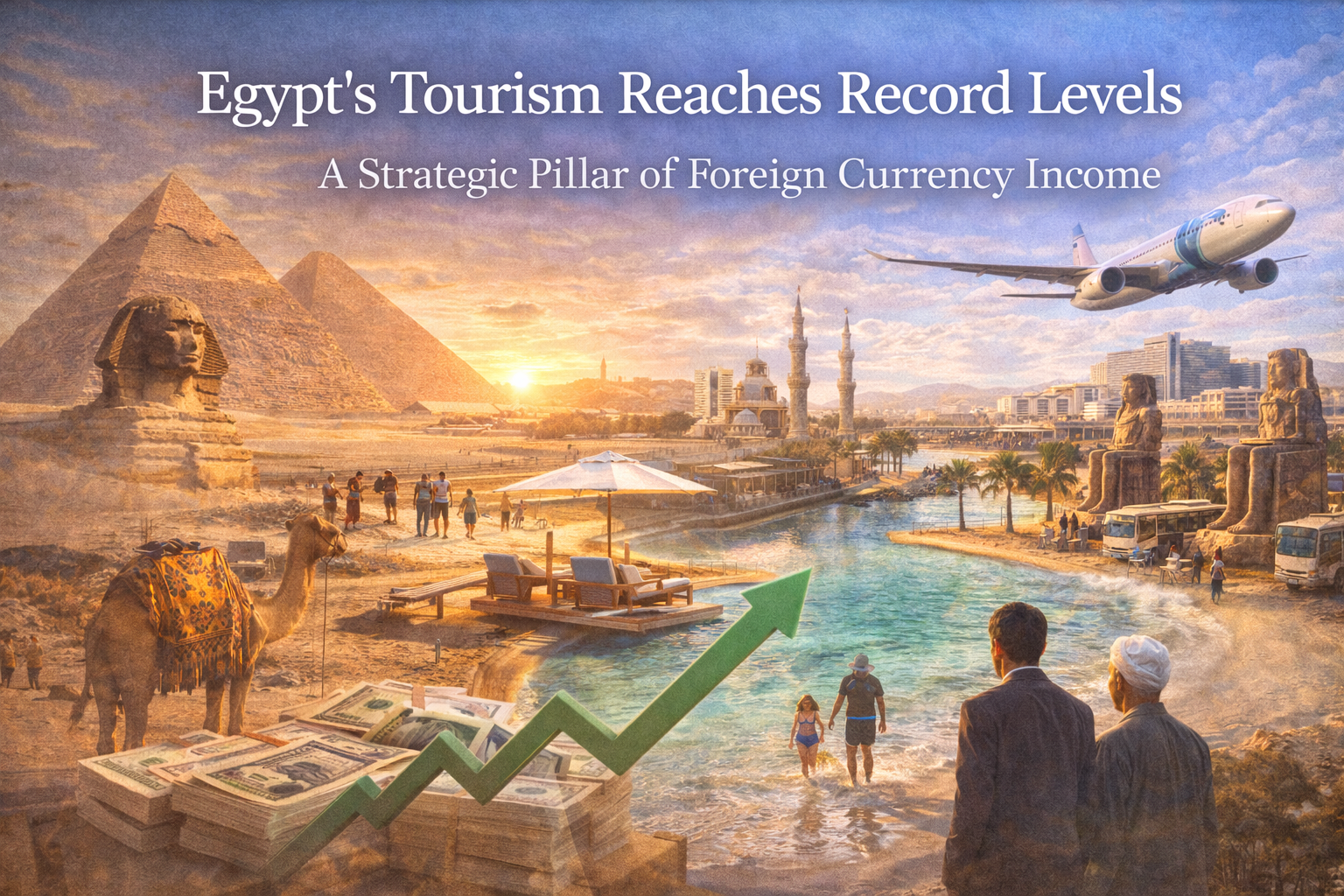
Tourism Reaccelerates in Egypt
Egypt’s tourism sector is approaching record-breaking levels once again.
Home to iconic destinations such as the Pyramids of Giza, Luxor, and the Red Sea resorts, tourism is not merely one industry among many — it is a strategic national asset.
Drivers Behind the Surge
The rebound is supported by improved security conditions, expanded international flight connections, new airport infrastructure, and strong promotional efforts.
Enhanced access and upgraded facilities are strengthening Egypt’s competitive position in global tourism markets.
This growth reflects structural reinforcement, not just post-crisis recovery.
Impact on Foreign Currency Earnings
Tourism stands alongside oil and Suez Canal revenues as a major source of foreign exchange.
Higher tourism income supports currency stability, strengthens foreign reserves, and improves current account balances.
These macroeconomic benefits extend well beyond the hospitality sector.
Integration with Urban Development
Tourism expansion aligns with broader development initiatives, including the New Administrative Capital and Red Sea mega-projects.
New hotels, international brands, and infrastructure investments create multiplier effects across real estate and employment sectors.
Investment Implications
A stable and expanding tourism base supports long-term investment in hospitality, commercial property, and transportation infrastructure.
Rising foreign currency inflows can also enhance economic credibility and investor confidence.
Conclusion: Tourism as Structural Strength
Egypt’s tourism resurgence represents more than cyclical recovery.
With world-class heritage assets and improved infrastructure, the sector is positioned as a durable growth engine.
As connectivity and capacity expand, tourism will likely play an even more central role in Egypt’s economic trajectory.
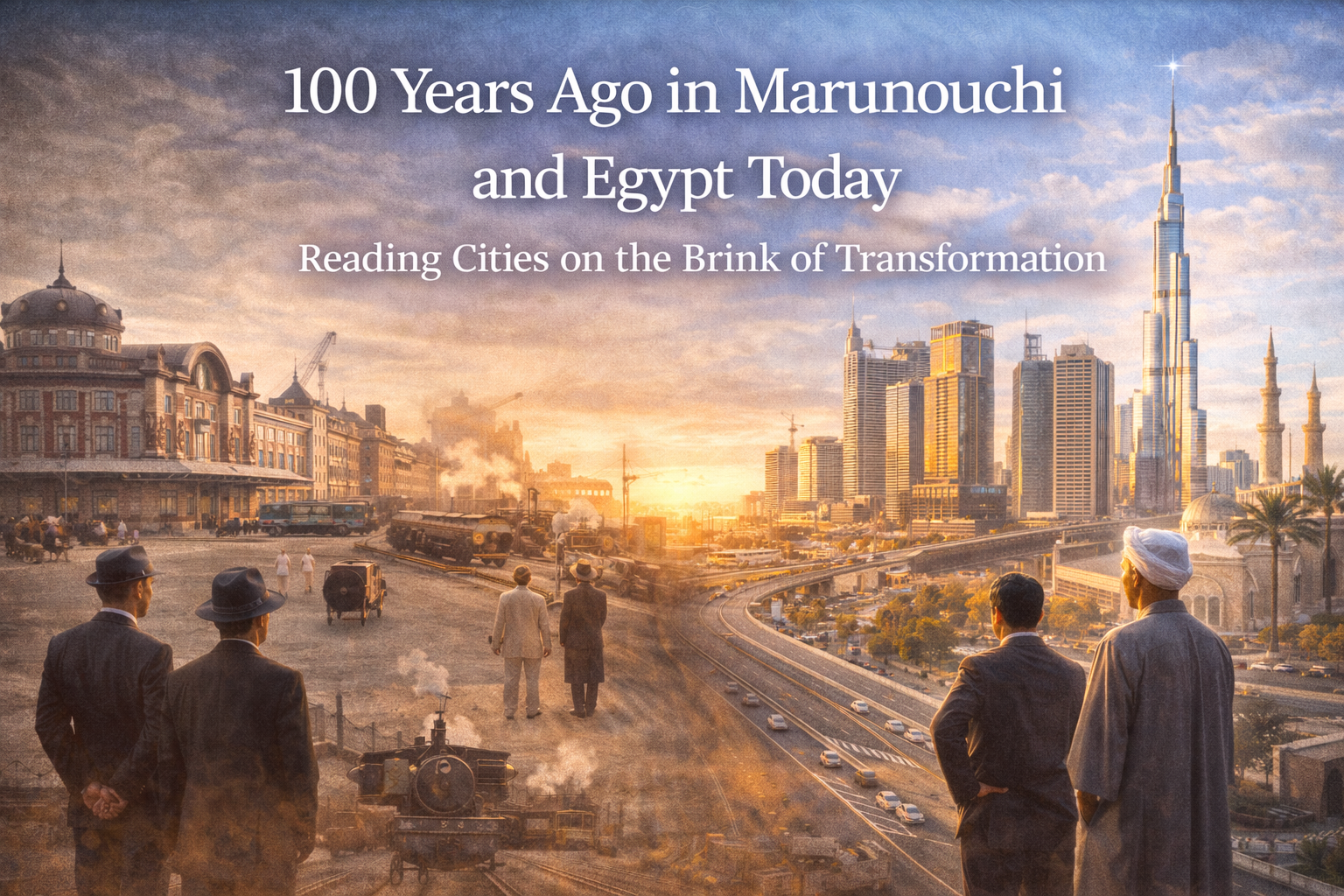
Imagine Tokyo’s Marunouchi district a century ago.
It was far from the global financial center it is today.
Yet the foundations — infrastructure, planning, and long-term vision — were already in place.
At the time, it did not look like a finished city.
It was a city at the threshold of transformation.
Modern Egypt, particularly its New Administrative Capital, presents a comparable moment.
Marunouchi’s rise was supported by railway networks, office district planning, and systematic development.
Similarly, Egypt is investing heavily in infrastructure:
During early phases, such developments often appear excessive — until growth catches up.
In the initial phase of urban expansion, there may be visible vacancies, underutilized spaces, and gradual population inflow.
This does not necessarily indicate failure; it reflects a transitional period.
Few observers could fully envision Marunouchi’s future a century ago.
The key question is not current appearance, but long-term direction.
Egypt’s population exceeds 100 million, with a significant youth demographic.
Its strategic geographic position, control of the Suez Canal, and expanding domestic market strengthen its development potential.
Population scale and geographic leverage are critical components of sustainable urban growth.
Urban transformation unfolds over decades.
Evaluating such development through short-term metrics can obscure long-term potential.
Egypt today represents an evolving structure rather than a completed model — a phase where opportunity and uncertainty coexist.
History does not repeat itself identically, but patterns often rhyme.
What once seemed incomplete can later define a nation’s economic core.
The future of high-growth cities is visible only in hindsight.
Recognizing transformation while it is still unfolding is what separates observation from long-term vision.
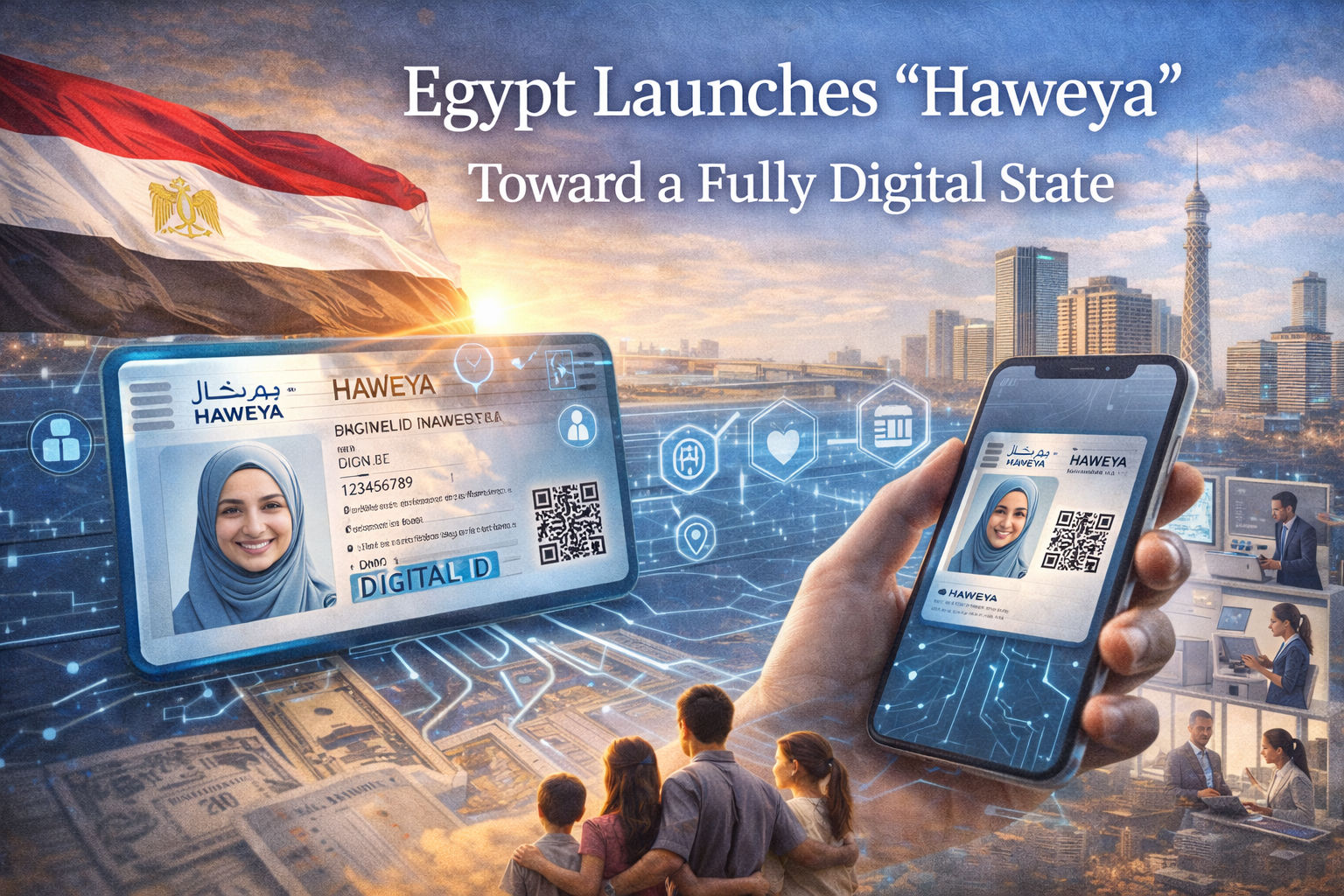
Egypt’s introduction of the national digital ID system, “Haweya,” marks a significant milestone in the country’s digital transformation strategy.
More than a simple online identification tool, it is designed as a foundational infrastructure connecting government services, financial systems, and public administration.
Haweya integrates citizens’ identity information into a secure digital authentication framework.
This enables streamlined online administrative procedures, improved access to financial services, and more efficient public service delivery.
Processes traditionally reliant on physical documentation are gradually transitioning to digital platforms.
Globally, digital ID systems are being adopted to enhance financial inclusion, strengthen tax systems, modernize government operations, and reinforce compliance measures.
With its large and youthful population, Egypt is positioning itself to participate more actively in the digital economy.
Digital ID infrastructure can accelerate banking access, support fintech development, encourage entrepreneurship, and expand digital payment ecosystems.
Lower barriers to identity verification may significantly broaden financial participation across underserved segments of society.
For investors, national digital ID systems signal institutional modernization.
Improved data management enhances tax transparency, reduces fraud risk, and strengthens credit systems.
Such developments contribute to overall economic credibility and long-term structural stability.
Haweya represents more than technological adoption — it reflects institutional reform.
As Egypt modernizes infrastructure, industry, and governance, digital identity becomes a cornerstone of its next growth phase.
The success of this initiative may serve as an important indicator of Egypt’s future economic trajectory.
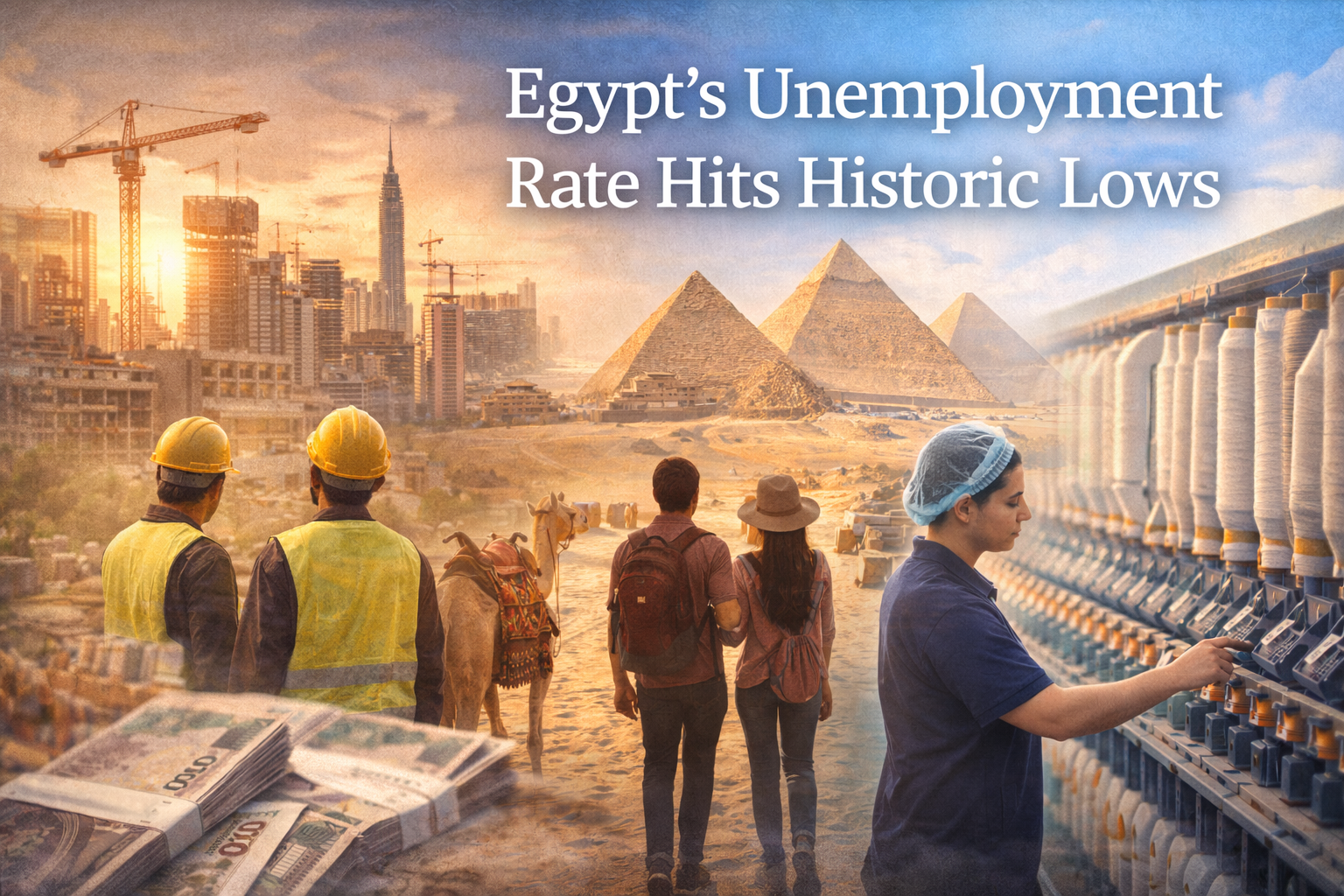
Egypt’s unemployment rate has recently fallen to historically low levels, marking a notable milestone in its economic trajectory.
Unemployment is often seen as a key indicator of economic health.
The critical question, however, is whether this decline reflects structural improvement or temporary stimulus-driven growth.
Several factors contribute to the improving employment figures:
Construction and public investment projects, in particular, have absorbed significant portions of the labor force.
A lower unemployment rate does not automatically guarantee long-term stability.
Important qualitative factors include youth employment levels, female labor participation, and the proportion of informal work.
Given Egypt’s young population, sustainable job creation remains essential.
The durability of employment gains depends on which sectors are expanding.
Public works may provide short-term relief, but private-sector growth, export industries, and diversified services offer more stable foundations.
Developments in textiles, tourism, and manufacturing will be key indicators moving forward.
Improving employment supports consumption growth and social stability.
Higher employment typically translates into stronger housing demand, increased retail activity, and urban expansion.
For investors, labor market trends serve as important signals for long-term economic momentum.
Egypt’s declining unemployment rate is an encouraging development.
However, its long-term significance depends on whether employment growth is structurally embedded within the economy.
Looking beyond the numbers to assess quality and sustainability will be crucial in evaluating Egypt’s next stage of development.

Egypt has long been known for its cotton and textile industry.
At the center of this legacy stands Misr Spinning & Weaving Company, one of the largest textile producers in the Middle East and Africa.
For decades, it played a central role in supporting Egypt’s cotton-based manufacturing sector.
However, global competition and aging infrastructure gradually weakened its position.
In recent years, Egypt has prioritized industrial revitalization as part of its broader economic strategy.
Reducing import dependence, increasing exports, and creating employment opportunities have become national objectives.
Modernizing the textile sector is a key element of this agenda.
The restructuring of Misr Spinning & Weaving Company represents more than corporate reform — it symbolizes industrial renewal.
The transformation centers on upgrading machinery, reorganizing production lines, improving efficiency, and enhancing quality control.
The goal is not merely to increase output, but to move toward higher value-added products, leveraging the global reputation of Egyptian cotton.
This shift reflects a strategy focused on competitiveness rather than scale alone.
Located in Mahalla El-Kubra, historically a textile hub, the company’s revival has broader economic implications.
Manufacturing industries generate ripple effects across supply chains, employment, and local economies.
The success of this modernization effort could influence regional development and reinforce industrial capacity.
Industrial revitalization signals structural economic strengthening.
If successful, increased export potential, diversified industry, and stable employment can contribute to long-term economic resilience.
Beyond tourism and real estate, the strength of the manufacturing base will shape perceptions of Egypt’s future growth trajectory.
The revival of Misr Spinning & Weaving Company is not simply about restoring past glory.
It represents an attempt to redefine a traditional industry within a modern, competitive framework.
As Egypt seeks to balance heritage with innovation, this transformation may serve as a key indicator of its industrial future.
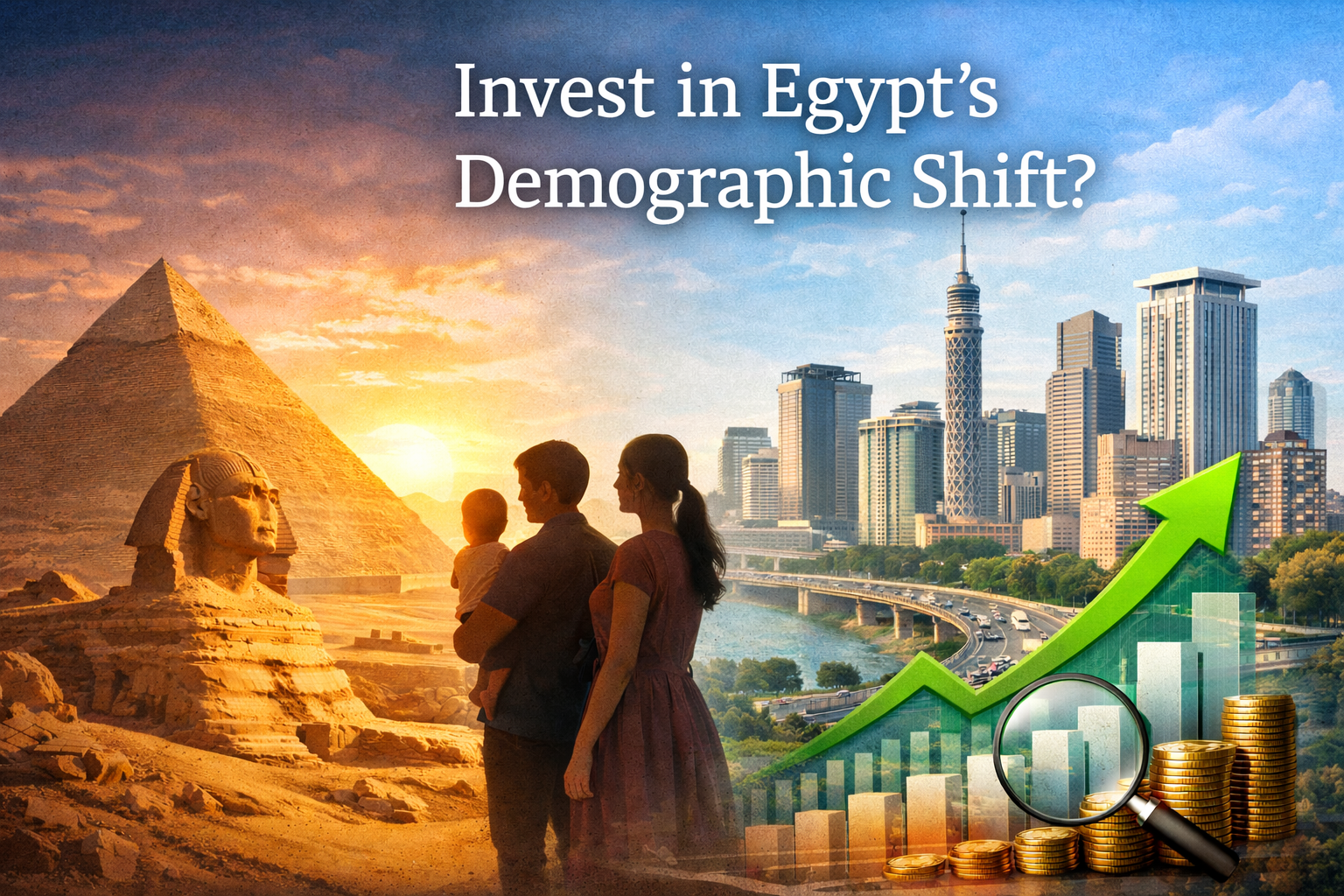
The term “declining birth rate” often carries negative connotations, suggesting economic stagnation or demographic decline.
However, demographic trends are more complex than simple growth or contraction.
In Egypt’s case, changes in birth rates may signal structural evolution rather than deterioration.
Egypt has long experienced strong population growth, supported by a large youth population and expanding labor force.
Recently, however, birth rates have shown signs of moderation.
This does not necessarily indicate demographic crisis, but rather a transition in the quality and pace of population growth.
Lower birth rates are often associated with urbanization, increased female workforce participation, rising education levels, and improving income conditions.
These are typical features of developing economies moving toward maturity.
In this context, demographic adjustment can reflect structural progress.
Demographics directly influence real estate, consumer markets, and infrastructure development.
Egypt still benefits from a young population and long-term consumption potential.
At the same time, demographic shifts may alter the nature of demand — from quantity-driven growth to quality-oriented expansion.
This transition can reshape housing, healthcare, education, and urban investment opportunities.
Historically, demographic transition phases often coincide with increased productivity, higher per-household spending, and expanding middle classes.
Such structural shifts can generate new forms of economic momentum and investment openings.
The key lies not in population size alone, but in the transformation of population structure.
Egypt’s demographic evolution remains broadly growth-oriented, yet subtle structural changes are underway.
Rather than reacting to headlines about declining birth rates, investors should analyze what those numbers truly represent.
Demographics are not merely statistics — they serve as indicators of economic direction.
Understanding this transition may offer insight into Egypt’s next phase of development.

Egypt’s New Administrative Capital has long been associated with ambitious plans and large-scale development.
With the launch of international scheduled flights at the New Capital International Airport, the project enters a new operational phase.
An airport is more than infrastructure — it symbolizes a city’s connection to the global economy.
The introduction of regular international routes signals tangible demand and growing international engagement.
It lowers barriers for business travel, tourism, and investment while strengthening the city’s autonomy from Cairo’s existing infrastructure.
Connectivity is often the dividing line between a planned city and a functioning one.
Airports significantly influence real estate, commercial development, and corporate decisions.
Improved accessibility can accelerate office demand, attract foreign enterprises, and support hospitality and residential growth.
For investors and developers, operational infrastructure reduces uncertainty and enhances long-term viability.
The new airport may gradually redefine transportation dynamics within Egypt.
Rather than replacing Cairo International Airport, it may complement it, distributing traffic and supporting administrative and business activities centered in the new capital.
This shift could reshape broader urban patterns over time.
Infrastructure milestones often mark psychological turning points in large-scale developments.
The activation of a major airport enhances credibility, lowers perceived project risk, and reinforces long-term planning confidence.
It signals that the city is not only being built — it is beginning to operate.
The launch of international flights at the New Capital Airport represents a decisive step in Egypt’s urban evolution.
Infrastructure transforms blueprints into reality.
As connectivity strengthens, the New Administrative Capital moves closer to establishing itself as a fully functioning international city.

The launch of Egypt’s first Sheraton Residences marks a significant milestone in the country’s real estate market.
This is not simply about high-end housing, but about bringing a globally recognized hospitality brand into long-term residential living.
Within the MENA region, this development stands out as a forward-looking example of how real estate markets are evolving.
Hotel-branded residences combine private ownership with the service standards and management expertise of international hotel brands.
Residents benefit from:
The introduction of such a model in Egypt reflects a growing demand for lifestyle-driven real estate rather than purely price-based offerings.
Several factors have converged to make this development possible:
These trends have created a market ready to absorb branded residential products.
Branded residences often influence more than just their immediate surroundings.
They can elevate neighborhood perception, set new benchmarks for quality, and attract international attention and capital.
In this sense, the Sheraton Residences project signals Egypt’s gradual shift from an emerging property market toward a more selective, globally connected one.
From an investment standpoint, hotel-branded residences are not purely yield-driven assets.
Their appeal lies in brand differentiation, long-term value preservation, and alignment with international demand.
As Egypt’s first example, this project serves as an indicator of how the market may develop in the years ahead.
Egypt’s first Sheraton Residences represent more than a new property launch — they reflect a maturing real estate landscape.
Whether this model remains niche or becomes more widespread, it offers valuable insight into the direction of Egypt’s property market and its integration into global real estate trends across the MENA region.
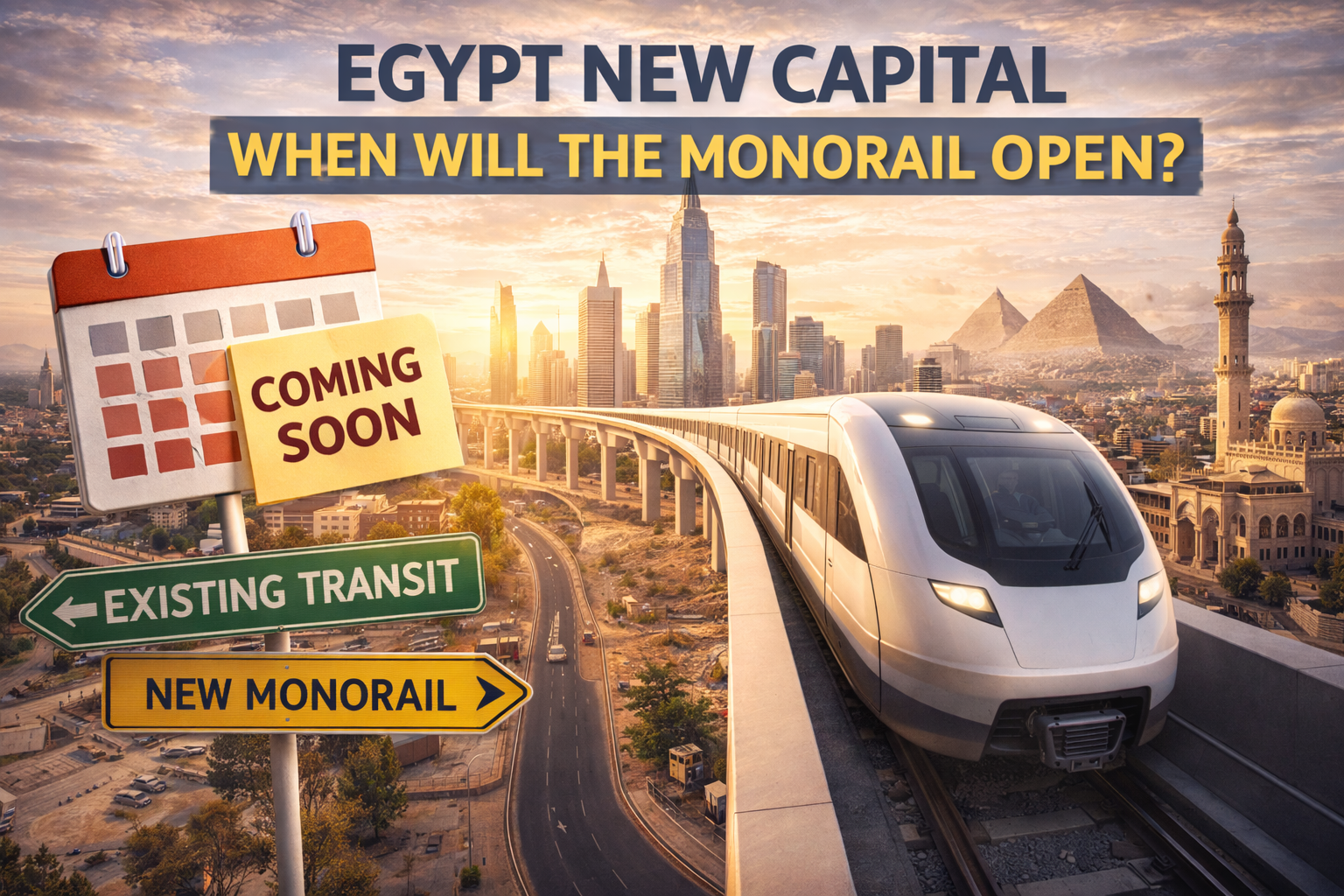
Egypt’s New Administrative Capital is a major national project designed to reduce congestion in Cairo and redistribute population and services.
A key part of this vision is a modern transport network linking the new capital with existing urban centers — and at the forefront of that plan is a monorail system.
The planned monorail is expected to serve as a high-speed urban transit link, improving mobility between Cairo and the new capital.
The monorail is not just another transit option. It is envisioned as a foundational piece of infrastructure that will:
In essence, it aims to reshape how people and economic activity flow between urban zones, enhancing quality of life and regional connectivity.
Egypt already operates metro lines in Cairo and rail links connecting major cities.
The new monorail’s role is complementary, not competitive.
Existing rail and metro services focus on high-capacity urban transit, while the monorail is being planned for fast intercity movement and stronger links between new and existing urban centers.
This distinction in purpose creates a layered and efficient transit ecosystem.
While precise dates depend on project progress, government and planning updates indicate that phased openings are expected over the coming years.
Initial segments are likely to connect key corridors between the new capital and southern or eastern parts of Cairo, with further extensions tied to demand and network integration.
This staged approach allows infrastructure to grow in step with urban expansion.
The New Administrative Capital is not merely an administrative relocation; it is meant to embody the future of urban living — blending technology, comfort, and connectivity.
Reliable transportation is central to this vision. A well-functioning monorail will ease commuting, support economic interaction, and anchor future growth.
Although a public transit project, the monorail will have broader economic effects.
Real estate values, commercial activity, and logistics patterns along the route may shift as segments open.
Understanding how infrastructure intersects with development can provide valuable insights for real estate and business strategy planning.
The monorail linking Egypt’s New Capital with the existing urban fabric represents more than a transport line: it is a circulatory system for people, ideas, and economic activity.
While its rollout will unfold over time, its strategic importance to Egypt’s urban evolution is clear — and its impact will ripple across mobility, investment, and quality of life for years to come.
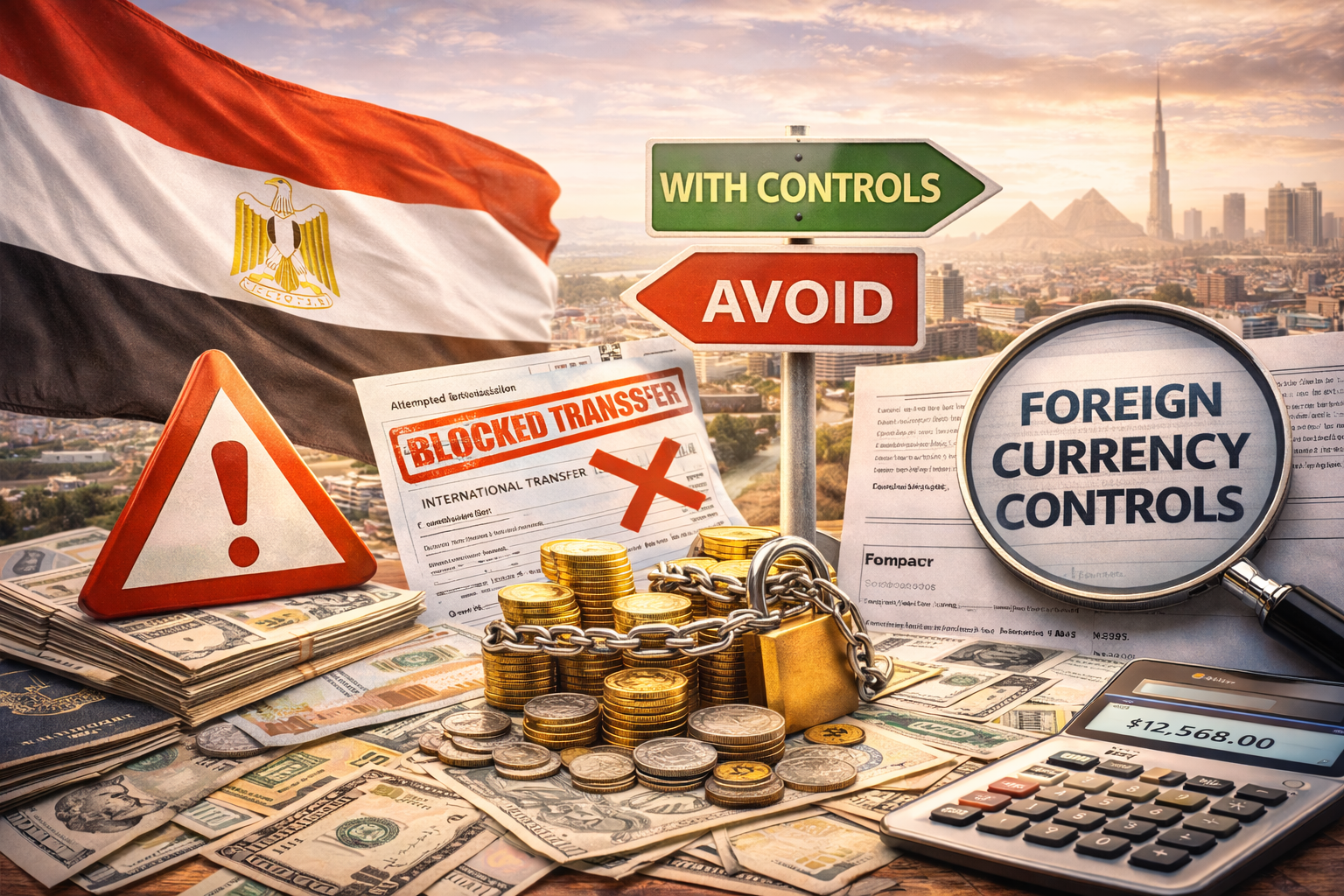
For foreign investors and businesses operating in Egypt, foreign currency controls are an unavoidable reality.
Even when profits are generated locally, converting funds into foreign currency or transferring them abroad can be difficult. These controls are not temporary measures, but part of a broader policy framework aimed at stabilizing foreign reserves and the exchange rate.
Discussions often focus on how to “bypass” currency controls. In practice, however, attempting to circumvent regulations usually creates greater risk.
A more sustainable approach is to design investment and business structures with currency controls as a given.
Ignoring the system can result in frozen funds, blocked transfers, or regulatory complications that undermine the entire investment.
Experienced investors tend to adopt realistic strategies, such as:
These approaches share a common theme: reducing reliance on short-term capital movement.
While currency controls are often seen as obstacles, understanding them is a critical element of risk management.
Knowing what transactions are allowed, when currency conversion is possible, and which routes are realistic helps investors avoid unexpected disruptions.
Investing in Egypt requires letting go of the assumption that capital can always move freely.
Instead, investors must focus on:
This shift in mindset is essential for sustainable engagement with the market.
Egypt’s foreign exchange controls undoubtedly impose limitations.
Yet they also define the framework within which successful investments must operate.
Rather than searching for shortcuts, investors are better served by understanding the system and working within it.
This pragmatic approach is key to building resilient, long-term investment strategies in Egypt.
Please feel free to contact us from the email form.

 Inquiries by email
 Bookmark
 Browsing history



 Bookmark
 Browsing history
