

While Dubai has traditionally attracted expatriates for business and tax advantages, education has become an increasingly important driver of relocation.
The city offers a wide range of international schools representing different global curricula, making it one of the most diverse education hubs in the region.
The most sought-after schools in Dubai typically follow one of three systems:
Each pathway aligns with different university destinations and educational philosophies.
British schools are among the most established in Dubai.
They offer structured academic progression and strong university placement records, particularly for the UK and Europe.
School reputation often plays a significant role in university admissions outcomes.
IB schools emphasize critical thinking, research, and global awareness.
Their flexibility and international recognition make them attractive to families seeking worldwide university options.
The program is academically demanding but widely respected.
American schools typically offer credit-based systems, diverse extracurricular activities, and strong college counseling support.
They are well-suited for families targeting U.S. higher education or preferring a broader academic structure.
Choosing the right school requires evaluating tuition costs, admission competitiveness, residential proximity, and family educational goals.
Popular schools often have waiting lists, making early planning essential.
Education-led relocation is not simply about changing location — it is about long-term life strategy.
Dubai has evolved into a global education center, combining international curricula with high living standards and infrastructure.
For families considering relocation, school selection is one of the most critical decisions.
Approaching it strategically can shape not only a child’s education, but the family’s entire relocation experience.

Aman, one of the world’s most exclusive luxury brands, has officially entered the Dubai market with Aman Residences Dubai.
This is more than a new high-end development.
It represents a milestone in Dubai’s transition toward a more mature and globally integrated luxury ecosystem.
Unlike many luxury brands focused on scale, Aman is defined by restraint.
Low-density design, privacy, architectural minimalism, and deeply personalized service are central to its identity.
Its projects are intentionally limited, creating a sense of exclusivity that appeals to a select global clientele.
Dubai has long positioned itself as a hub for global wealth.
Today, however, the focus has shifted beyond spectacle toward livability, long-term residency, and asset preservation.
Aman’s entry aligns with this evolution, signaling that Dubai’s luxury real estate market is moving toward refinement rather than expansion alone.
Aman Residences combine ownership with hospitality.
Residents benefit from the brand’s service standards, curated amenities, and international reputation.
Ownership in such developments is not merely real estate acquisition — it represents participation in a defined global lifestyle.
In the branded residence sector, brand equity plays a decisive role in value retention.
Aman’s limited supply strategy enhances scarcity, which can support long-term positioning in international markets.
In a city like Dubai, globally recognized brands contribute to liquidity and credibility.
Aman Residences Dubai introduces a new dimension to the city’s luxury narrative.
Beyond grandeur, it emphasizes tranquility, privacy, and experiential depth.
As Dubai’s ultra-luxury segment matures, Aman’s arrival reflects a shift toward subtle, enduring value rather than conspicuous display.
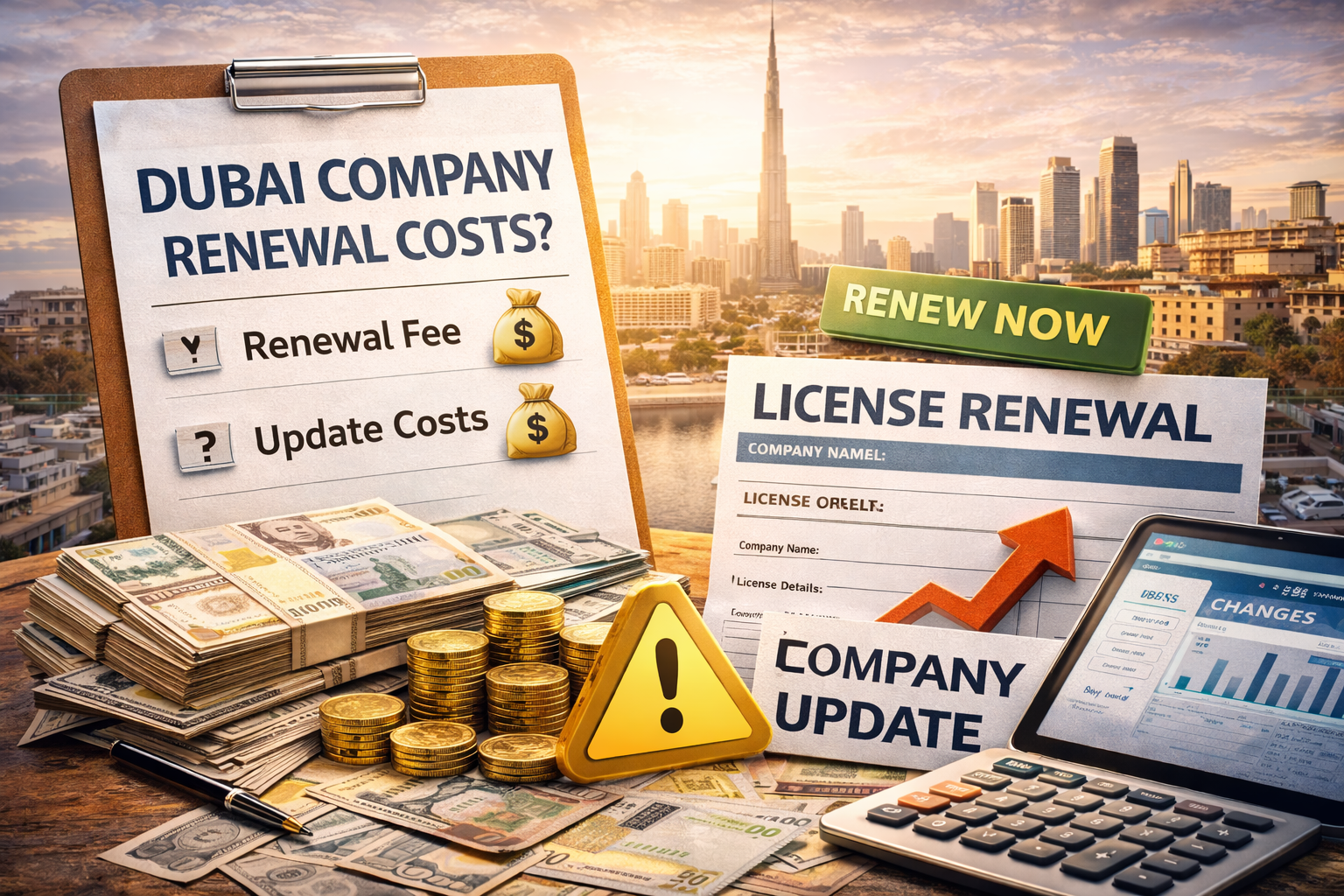
When setting up a company in Dubai, attention is usually focused on incorporation costs.
In practice, however, annual renewal and maintenance expenses have a much greater long-term impact.
A company must be continuously maintained and renewed — it does not end at incorporation.
Most Dubai companies are required to renew the following each year:
These expenses vary depending on company type and license, but they should be treated as recurring fixed costs.
Additional costs often arise when company details are modified during renewal.
Common changes include:
Such changes usually involve application fees, document preparation, and additional approvals — making renewal more complex and costly than expected.
At first glance, Dubai company renewals may appear inexpensive.
However, future changes such as business expansion, shareholder restructuring, or increased visa requirements can significantly increase total costs.
For this reason, renewal expenses should be evaluated not only based on current needs, but also on potential future scenarios.
To manage a Dubai company effectively over time, it is important to consider:
Planning with these factors in advance helps avoid unnecessary expenses and administrative setbacks.
Renewal costs are more than routine expenses — they reflect the quality of a company’s structure and management.
Rather than focusing solely on short-term affordability, understanding renewal and modification requirements is essential for building a sustainable Dubai business.
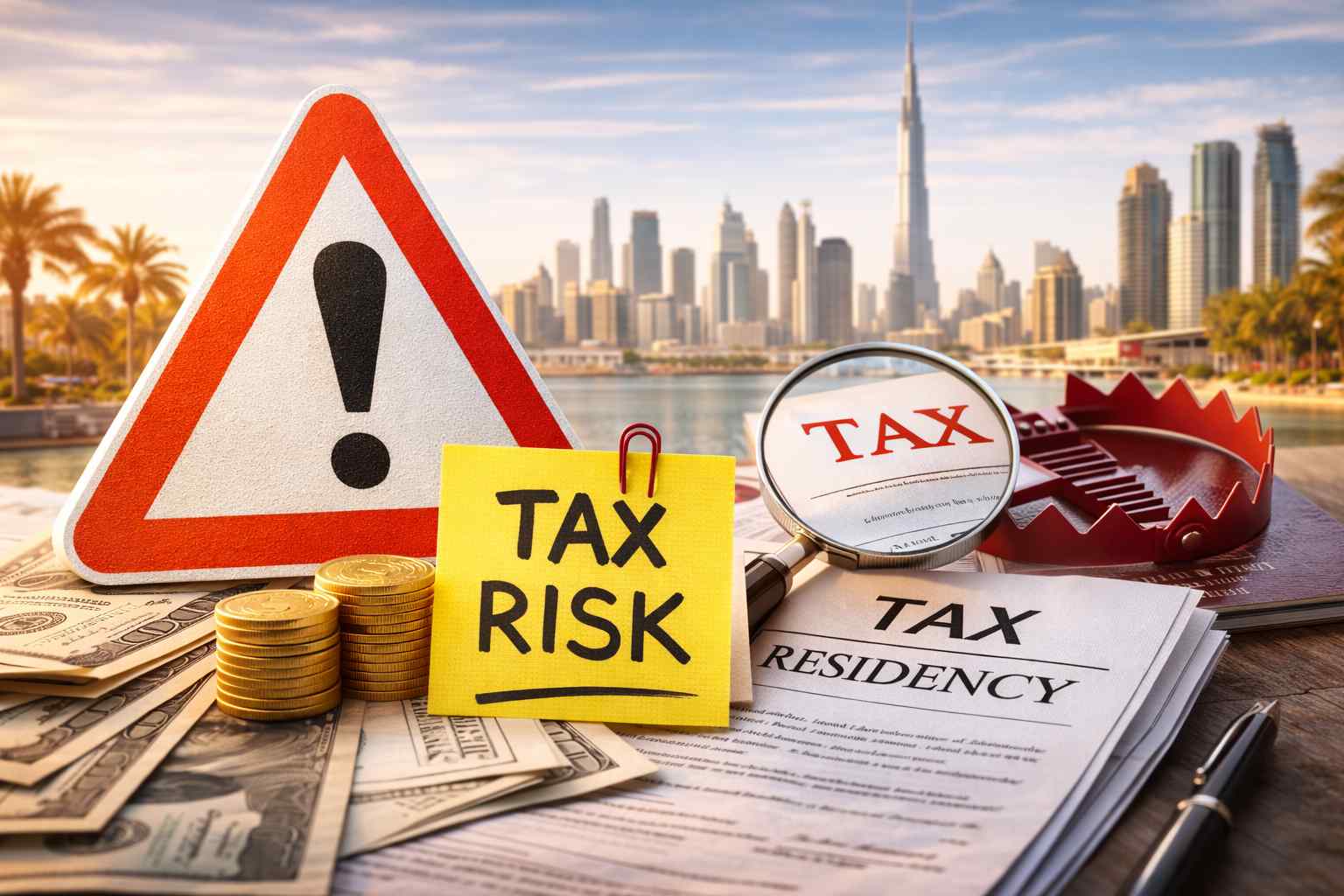
Dubai is widely known as a tax-free destination, attracting entrepreneurs, investors, and high-net-worth individuals from around the world.
Indeed, there is no personal income tax in Dubai.
However, assuming that relocating to Dubai automatically eliminates all tax obligations can be misleading. In reality, many expatriates encounter unexpected tax risks after moving.
In most countries, taxation is not determined solely by where you live physically, but by where you are considered a tax resident.
Factors such as where your family resides, where your assets and income sources are located, and how often you travel back to your home country can all influence residency status.
As a result, some individuals who believe they have “left” their home country may still be treated as tax residents there.
While Dubai itself may not tax personal income, other countries may still assert taxing rights over global income.
This creates risks such as:
Believing that “Dubai is tax-free” without understanding international tax obligations can lead to serious financial consequences.
Even without income tax, relocating to Dubai involves ongoing costs and responsibilities:
These factors should be considered as part of the overall cost of relocation.
Before deciding to relocate, it is essential to look beyond headline tax benefits.
Ask yourself:
Clear answers to these questions are critical for avoiding future problems.
Dubai offers significant advantages, but “zero tax” should not be viewed as a universal solution.
Understanding the full legal and tax framework — and how it applies to your personal situation — is key to making relocation a success.
A well-planned move focuses not only on immediate benefits, but on long-term stability and compliance.
Emaar is more than just a real estate developer. It is one of the defining forces behind Dubai’s urban landscape, responsible for many of the city’s landmark projects.
Because of this role, Emaar’s share price is often viewed as a reflection of broader sentiment toward Dubai’s real estate market rather than simply the performance of one company.
Equity markets are forward-looking by nature.
Emaar’s valuation incorporates expectations about future supply, demand sustainability, investor behavior, and financial conditions such as interest rates.
As a result, the stock price may weaken even when on-the-ground property sales appear strong. This divergence often confuses investors who focus only on current market activity.
When Emaar’s stock loses momentum, the market may be signaling concerns such as:
These risks are not always visible in transaction data, but they tend to surface earlier in equity markets.
A busy market does not automatically indicate stability.
Understanding who is buying, why they are buying, and at what price levels is essential.
Emaar’s stock movements can highlight underlying imbalances that are easy to overlook when attention is focused solely on property prices.
For those evaluating Dubai real estate, combining property-level analysis with insights from publicly listed developers provides a more comprehensive view.
Tracking Emaar’s share price helps investors understand how the market is pricing long-term expectations, risks, and growth potential.
Emaar’s stock does not shout — it whispers.
By paying attention to these subtle signals, investors can gain a clearer understanding of where Dubai’s property market may be heading, beyond the excitement of short-term trends.
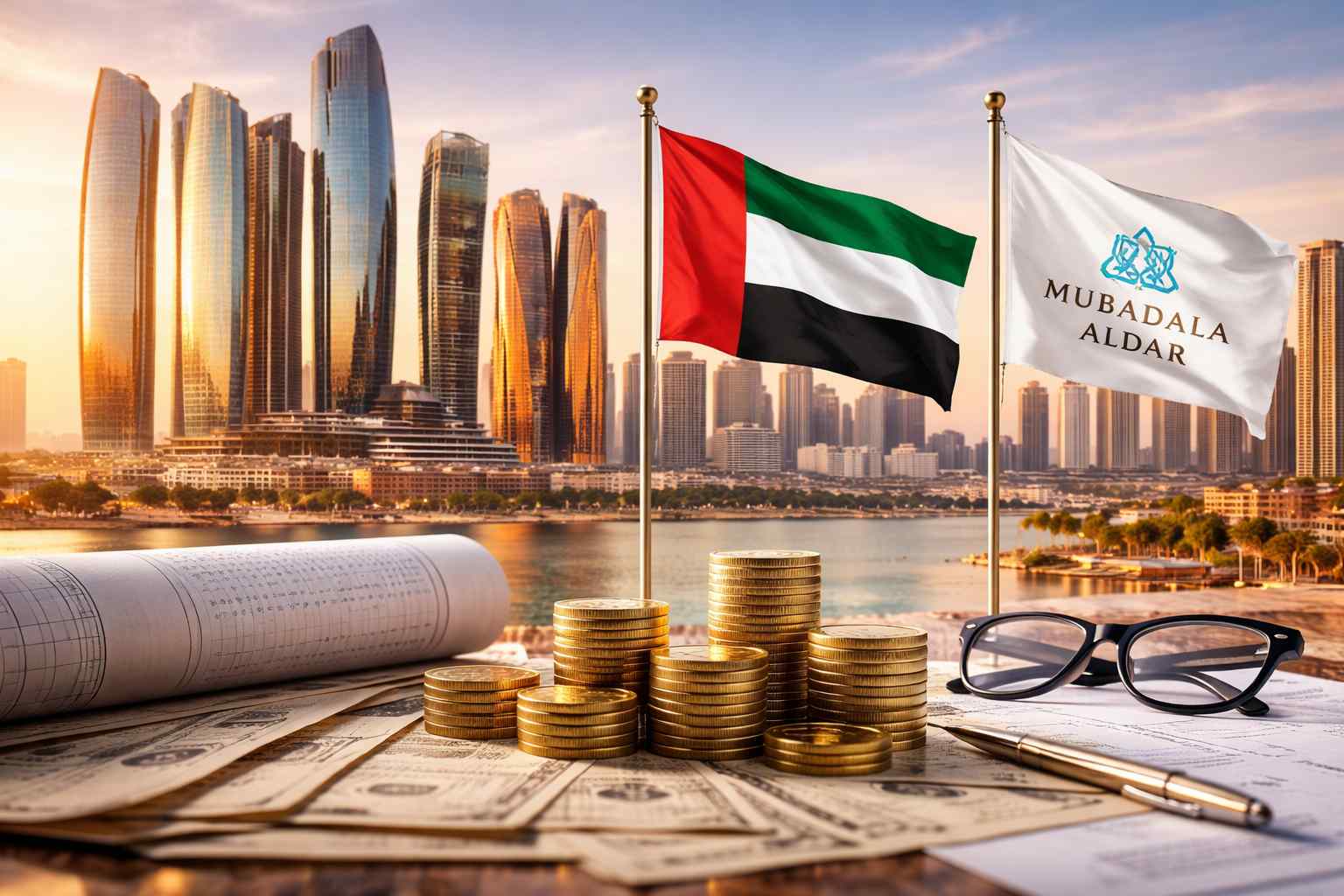
Abu Dhabi has recently demonstrated a clear and deliberate strategy to position itself as a global capital hub. At the center of this move is the partnership between real estate developer Aldar Properties and sovereign investment company Mubadala.
This collaboration goes beyond corporate growth. It represents a national effort to attract long-term global capital and strengthen Abu Dhabi’s role within the GCC and the wider global economy.
Aldar is a leading developer shaping Abu Dhabi’s urban landscape, while Mubadala acts as a long-term strategic investor aligned with national priorities.
Together, they provide two critical elements investors seek: scale and credibility.
For global investors, confidence comes from understanding who leads a project, whether government backing exists, and whether a long-term vision is clearly defined. The Aldar–Mubadala partnership delivers on all three.
Several factors are driving international investors toward Abu Dhabi.
Political stability and strong governance offer a secure environment. Investor-friendly regulations and tax structures support long-term planning. Most importantly, state-backed development reduces uncertainty in large-scale projects.
As a result, Abu Dhabi is increasingly seen as a place where capital can be deployed with confidence.
This momentum extends beyond Abu Dhabi itself. Within the GCC, roles are becoming more clearly defined.
While Dubai continues to lead in commerce and tourism, Abu Dhabi is emerging as the region’s center for sovereign capital, long-term investment, and large-scale development.
This complementary dynamic strengthens the GCC’s overall position in the global economy.
For investors, the key is not short-term price movement, but structural direction.
Understanding where national capital is being deployed, which cities are prioritized, and who leads development provides valuable insight into long-term opportunities. The Aldar–Mubadala strategy offers a clear signal of where Abu Dhabi is heading.
Abu Dhabi is transitioning from a resource-driven economy to a global platform for long-term capital.
The Aldar–Mubadala partnership symbolizes this shift. It is not a temporary investment cycle, but a carefully designed national strategy.
As global capital continues to seek stability and scale, Abu Dhabi’s role will only grow more significant.
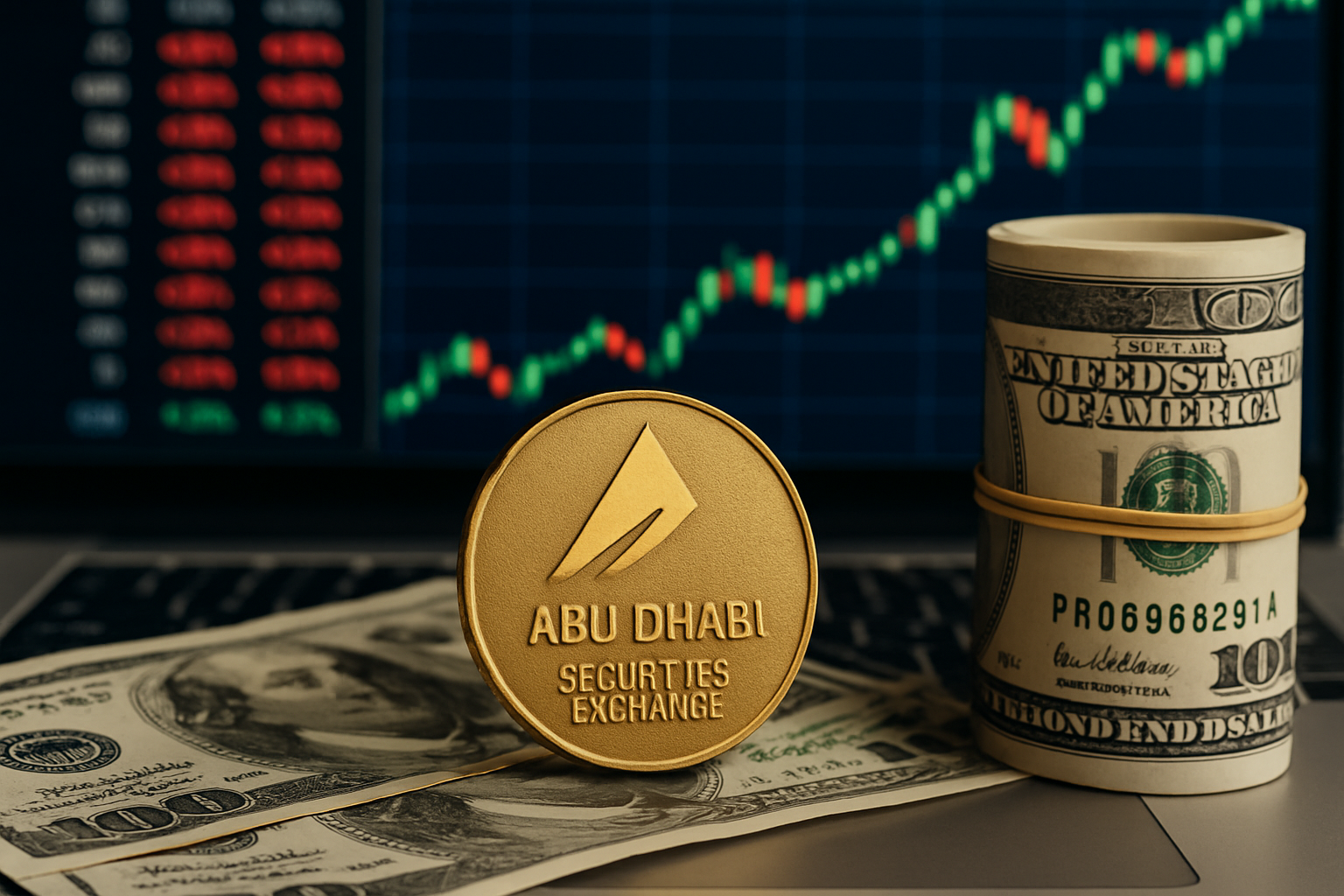
In recent years, Al Dar Properties has re-emerged as a leading candidate for the “next Emaar” in the UAE real-estate market. If you’re looking to buy their shares, the most critical requirement is a brokerage account that can access the listing exchange.
Al Dar shares are listed on the Abu Dhabi Securities Exchange (ADX). To trade them, you must open an account with a brokerage that supports ADX. Many standard brokerages you find in Japan or elsewhere handle U.S. or European stocks, but not necessarily securities from ADX. Therefore, choosing the right broker is the first essential step.
While almost any broker with ADX access lets you buy the same Al Dar stock, the differences lie in transaction costs, minimum deposits, usability of trading tools, and customer support. Ultimately, you want to minimize costs and maximize convenience.
A compelling, more nuanced approach is to build a hybrid investment strategy:
This way, you maintain a stable income stream from bonds while positioning yourself for growth with real-estate equities. For long-term investors or those new to real-estate stock, this “stability + growth” approach can offer a balanced and sustainable path.
In a time of global economic uncertainty, a well-thought-out, diversified, and patient strategy can be more valuable than chasing short-term gains.
Real-estate developers like Al Dar sit at the origin of supply chains for housing, commercial, and infrastructure developments. In the past, companies like Emaar captured massive growth, rewarding early investors.
Rather than treating those success stories as history, the current environment offers a chance to search for the next big opportunity. If you approach this investment with careful attention to regulatory frameworks, market conditions, corporate positioning, and disciplined capital planning, long-term value creation may be within reach.

Since Dubai opened its real-estate market to foreign investors in 2002, the sector has expanded rapidly. Emaar has been one of the most prominent forces driving that growth.
If an investor had placed roughly ¥1 million (≈25,000 AED) into Emaar stock in 2002, that investment could now be worth over ¥280 million. Through stock splits and sustained growth, a holding of 25,000 shares would have increased to about 521,950 shares, valued around 7.1 million AED today.
That is a 284-fold return — achieved not by owning property, but by owning the company that creates the properties.
While many people focus on buying real estate directly, the real leverage often lies upstream — in the companies that acquire land, design projects, and build entire communities.
Emaar’s growth reflects the power of being positioned at the starting point of value creation. Real estate prices rarely increase hundreds of times, but companies driving urban development can grow exponentially in expanding markets.
For investors seeking similar long-term potential, Al Dar Properties in Abu Dhabi is emerging as a strong contender.
Reasons for investor attention include:
Al Dar may be positioned to lead the next wave of regional real-estate expansion.
Emaar’s example underscores the value of investing not only in real estate assets, but in the companies that shape the entire market.
A broader perspective — focusing on development capacity, business models, and market influence — may offer greater long-term returns than relying solely on rental income or short-term flips.
Those who understand the mechanisms behind market growth may be best positioned to capture the next major opportunity.
Please feel free to contact us from the email form.

 Inquiries by email
 Bookmark
 Browsing history



 Bookmark
 Browsing history
