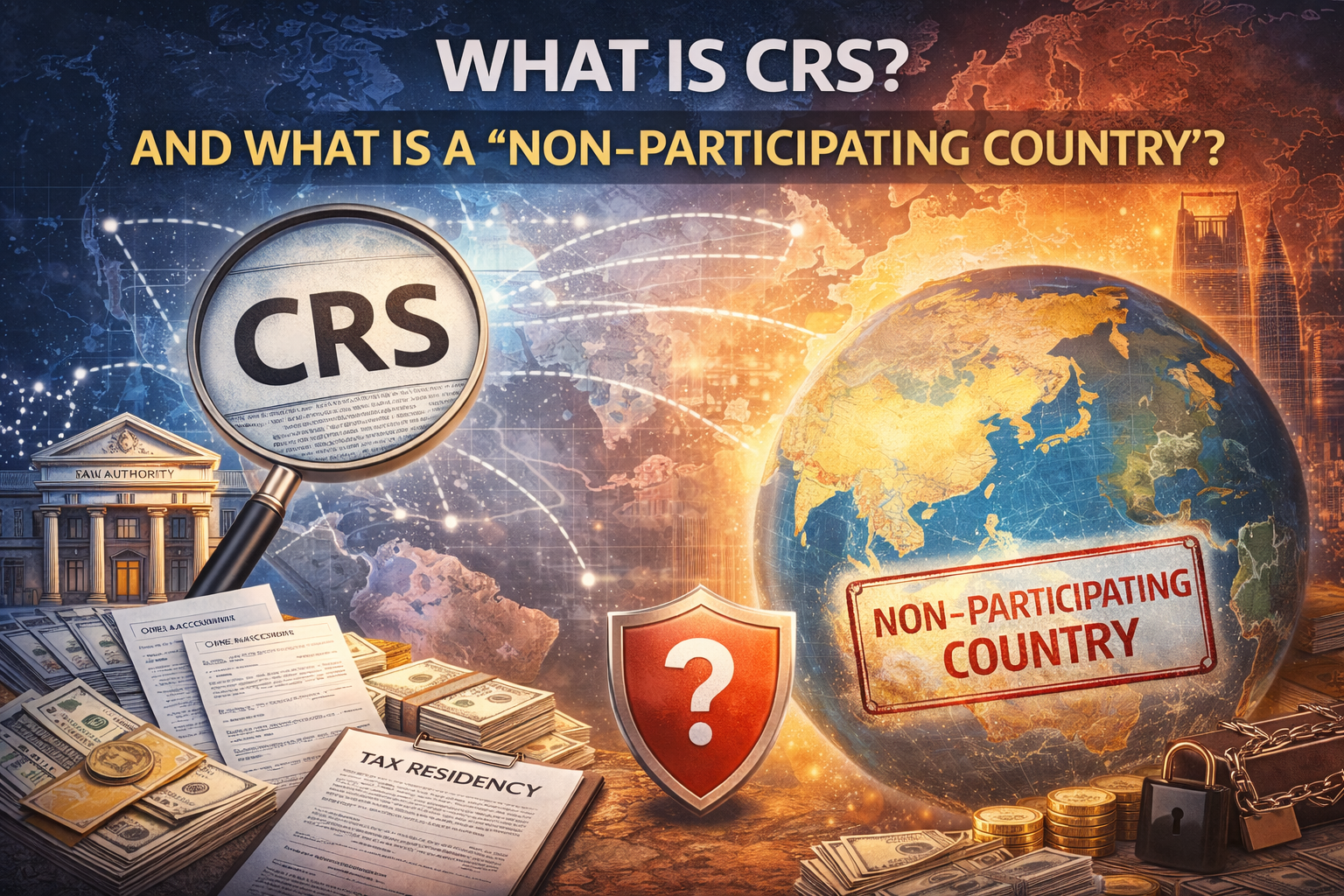
The Common Reporting Standard (CRS) is an international framework that enables tax authorities to automatically exchange financial account information.
Its purpose is to prevent tax evasion through offshore accounts by ensuring transparency across borders.
A common misconception is that CRS allows governments to freely inspect all foreign bank accounts.
In reality, information exchange depends on several factors, including tax residency, participating jurisdictions, and account classifications.
CRS operates based on structured reporting rules, not indiscriminate monitoring.
Another frequent misunderstanding is the belief that holding accounts in non-CRS countries ensures privacy.
Even if a country is not formally participating in CRS, information may still be shared through bilateral agreements, bank compliance policies, or other international frameworks.
Relying solely on non-participation lists can create false security and unexpected risks.
CRS focuses less on where the account is located and more on where the account holder is tax resident.
Tax residency is determined by factors such as living arrangements, economic ties, and personal circumstances.
Changing account locations without changing tax residency rarely alters reporting obligations.
In the CRS era, the goal is not concealment but consistency and clarity.
Being able to explain why an account exists, how funds are sourced, and how income is reported is far more important than avoiding certain jurisdictions.
CRS may appear intimidating, but it is best understood as a baseline condition of modern international finance.
Rather than chasing perceived loopholes, individuals are better served by aligning their tax residency, account structures, and reporting obligations in a transparent and defensible manner.
This approach provides stability and confidence in a highly connected financial world.









Please feel free to contact us from the email form.

 Inquiries by email
 Bookmark
 Browsing history




 Bookmark
 Browsing history


