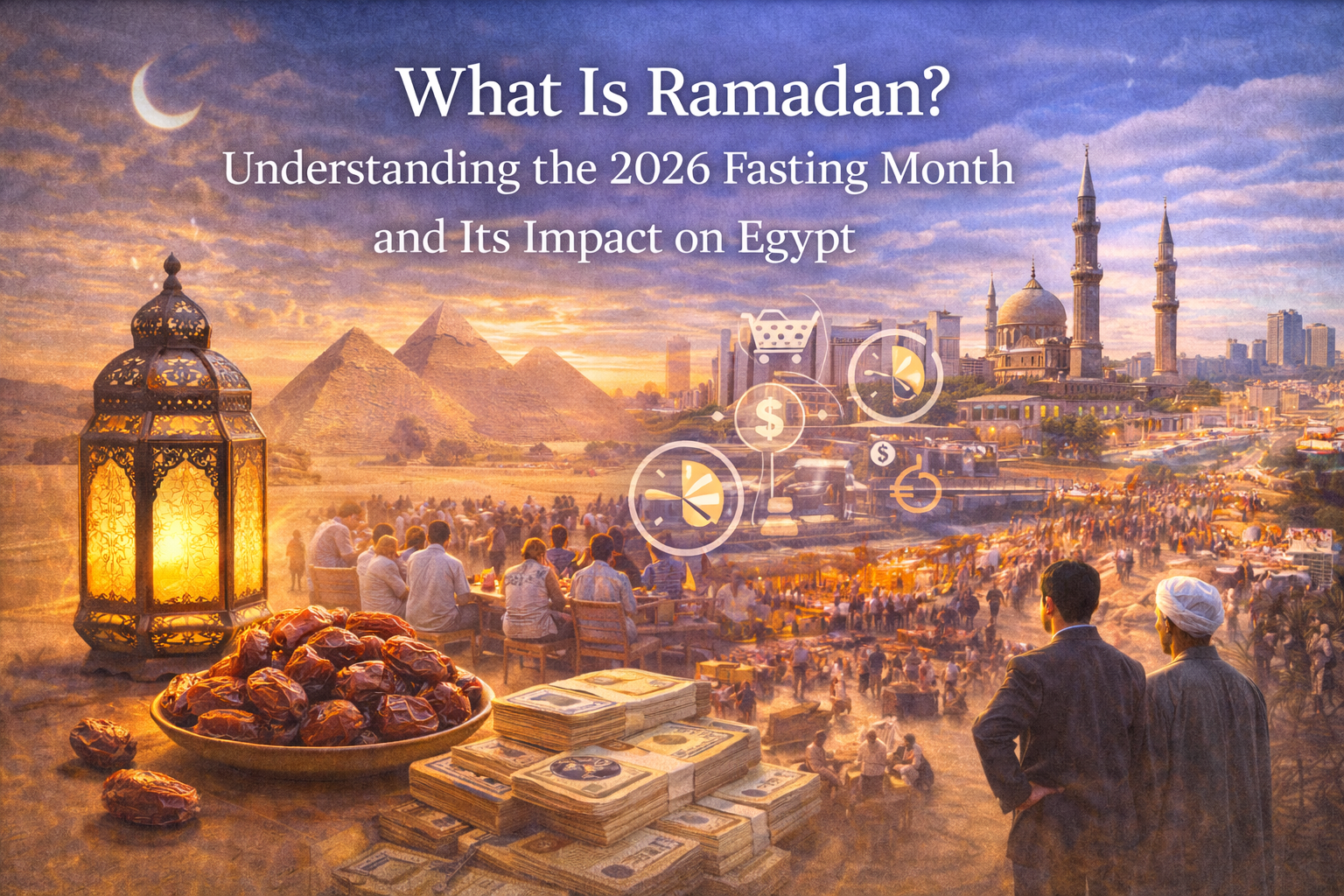
Ramadan is the ninth month of the Islamic calendar and is considered the holiest period for Muslims worldwide.
During this month, believers fast from dawn to sunset as an act of spiritual discipline and devotion.
In 2026, Ramadan will once again shape daily life across Egypt, influencing not only religious practices but also social and economic patterns.
With a predominantly Muslim population, Ramadan plays a central role in Egyptian life.
While daytime activities may slow down, evenings become vibrant after the breaking of the fast (Iftar).
Families gather, markets stay open late, and social interactions intensify.
Ramadan alters economic rhythms in distinct ways.
Working hours are often shortened, public offices adjust schedules, and consumer spending shifts toward evening hours.
Retail and food-related sectors typically experience increased demand, while physically demanding industries may see temporary productivity adjustments.
For tourists seeking cultural experiences, Ramadan offers unique insights into local traditions.
However, business visitors and companies operating in Egypt must adapt to modified schedules and social norms during this period.
Understanding these dynamics is essential for smooth operations.
Although Ramadan temporarily shifts consumption patterns, it does not fundamentally alter long-term market trajectories.
Instead, it provides insight into consumer behavior, community engagement, and cultural dynamics — all valuable factors for investors evaluating local markets.
In Egypt, Ramadan transcends religion and becomes a nationwide social phenomenon.
The 2026 fasting month will once again illustrate how faith, culture, and economics intersect.
For anyone engaging with Egypt, understanding Ramadan is an essential step toward deeper local awareness.
Please feel free to contact us from the email form.

 Inquiries by email
 Bookmark
 Browsing history



 Bookmark
 Browsing history


