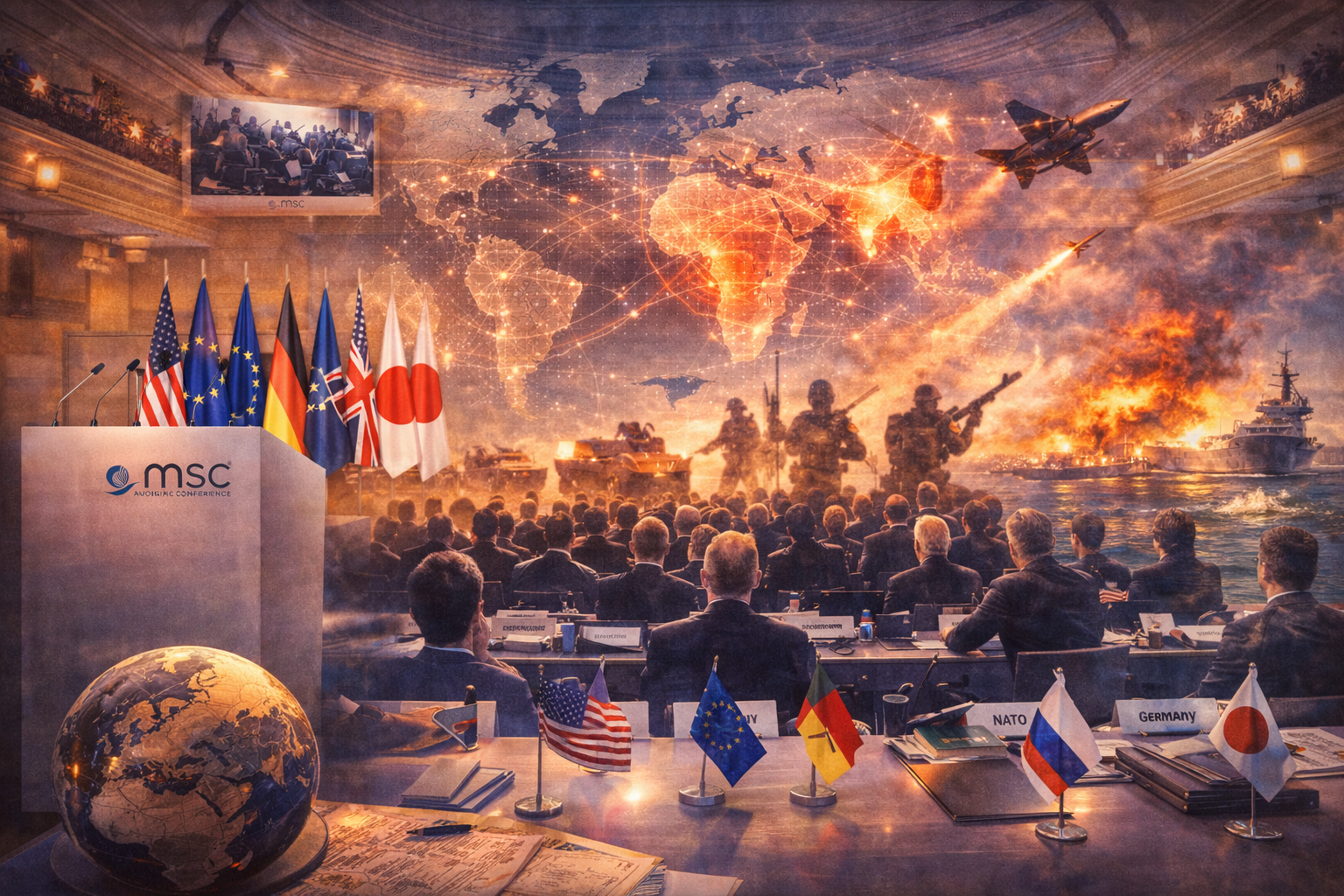
The Munich Security Conference, held annually in Germany, is one of the most influential gatherings for international security discussions.
Political leaders, foreign ministers, defense officials, and policy experts from around the world attend the event to debate pressing global security challenges.
The conference began in the 1960s as a platform primarily for Western defense dialogue.
After the end of the Cold War, participation expanded significantly, bringing representatives from Asia, the Middle East, Africa, and other regions.
Today it serves as a global forum for discussing international security issues.
The Munich Security Conference often becomes a stage where key geopolitical issues are addressed.
Topics frequently include international conflicts, military alliances, NATO’s strategic role, and emerging security threats.
Statements made by leaders during the conference can signal shifts in international policy directions.
In recent years, discussions surrounding defense spending and military modernization have become increasingly prominent.
Many countries are reassessing their security strategies, investing in new technologies, and strengthening military capabilities.
These developments influence global power balances and geopolitical dynamics.
For Japan, the conference provides an important diplomatic platform.
Japanese officials use the event to communicate policy positions and engage in dialogue with international counterparts.
It also offers opportunities for bilateral meetings and strategic coordination.
The Munich Security Conference is more than a traditional policy meeting.
It reflects broader shifts in global security, diplomacy, and strategic competition.
For observers of international affairs, the discussions held in Munich often provide valuable insights into the direction of global geopolitics.






Please feel free to contact us from the email form.

 Inquiries by email
 Bookmark
 Browsing history




 Bookmark
 Browsing history


