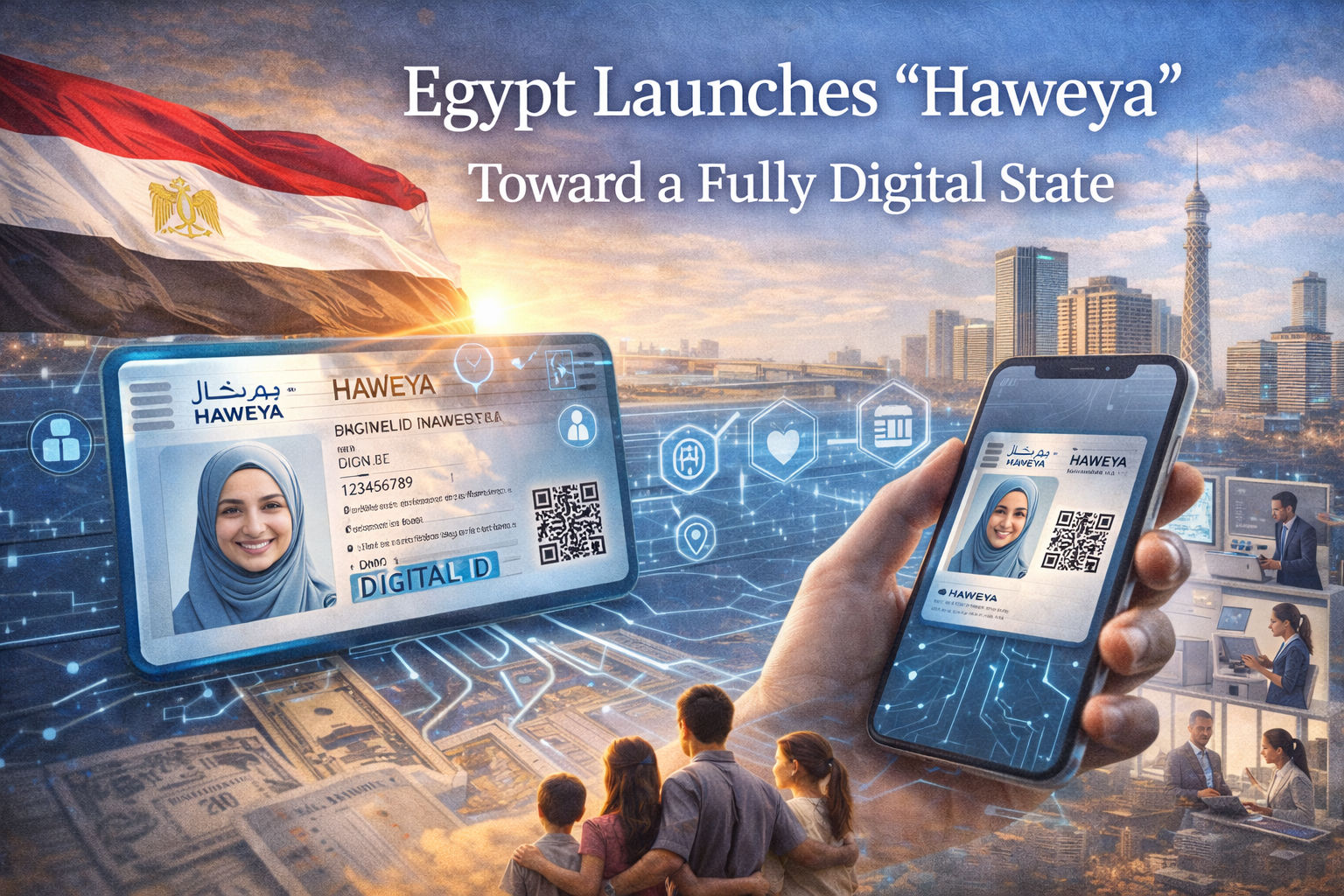
Egypt’s introduction of the national digital ID system, “Haweya,” marks a significant milestone in the country’s digital transformation strategy.
More than a simple online identification tool, it is designed as a foundational infrastructure connecting government services, financial systems, and public administration.
Haweya integrates citizens’ identity information into a secure digital authentication framework.
This enables streamlined online administrative procedures, improved access to financial services, and more efficient public service delivery.
Processes traditionally reliant on physical documentation are gradually transitioning to digital platforms.
Globally, digital ID systems are being adopted to enhance financial inclusion, strengthen tax systems, modernize government operations, and reinforce compliance measures.
With its large and youthful population, Egypt is positioning itself to participate more actively in the digital economy.
Digital ID infrastructure can accelerate banking access, support fintech development, encourage entrepreneurship, and expand digital payment ecosystems.
Lower barriers to identity verification may significantly broaden financial participation across underserved segments of society.
For investors, national digital ID systems signal institutional modernization.
Improved data management enhances tax transparency, reduces fraud risk, and strengthens credit systems.
Such developments contribute to overall economic credibility and long-term structural stability.
Haweya represents more than technological adoption — it reflects institutional reform.
As Egypt modernizes infrastructure, industry, and governance, digital identity becomes a cornerstone of its next growth phase.
The success of this initiative may serve as an important indicator of Egypt’s future economic trajectory.







Please feel free to contact us from the email form.

 Inquiries by email
 Bookmark
 Browsing history




 Bookmark
 Browsing history


