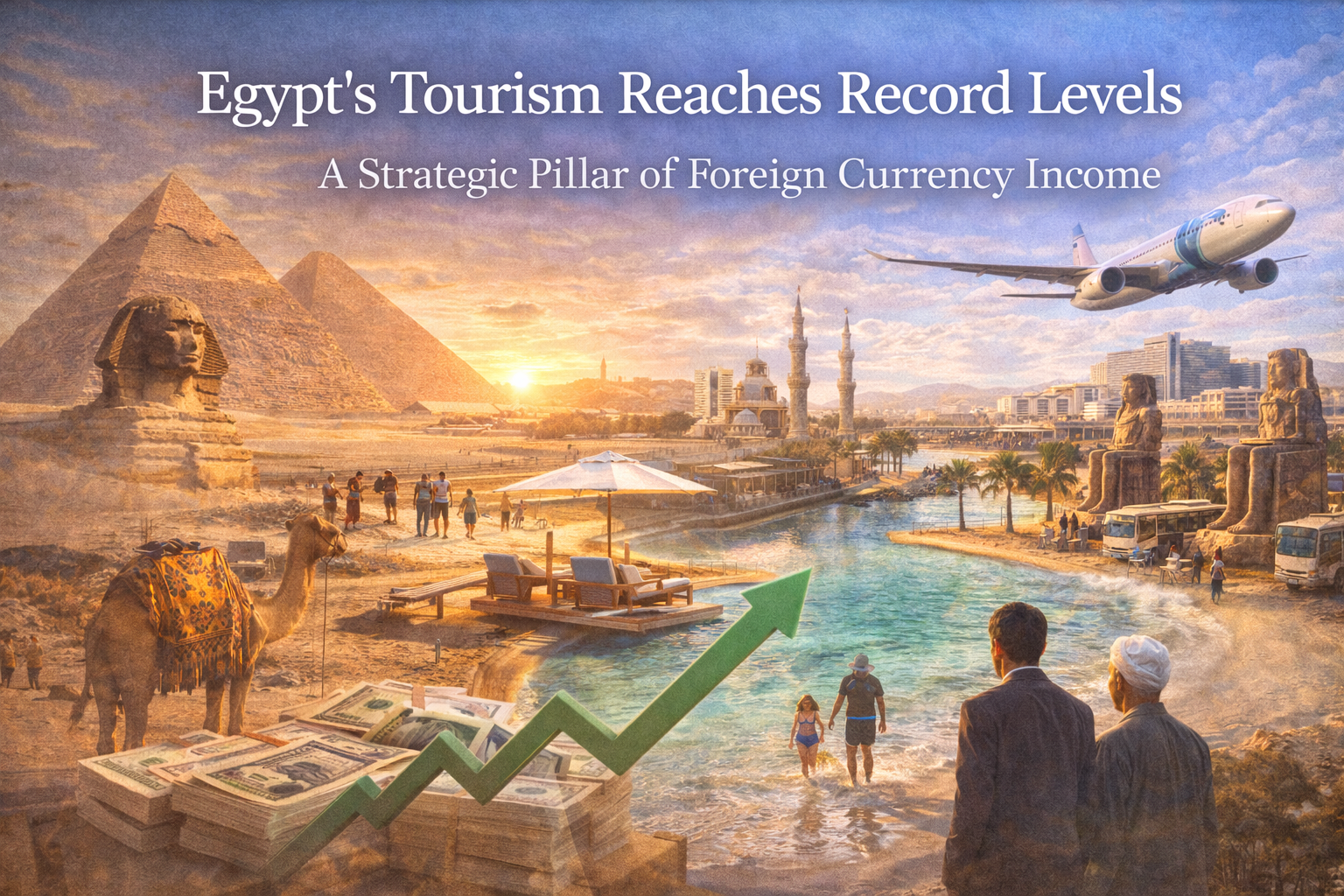
Tourism Reaccelerates in Egypt
Egypt’s tourism sector is approaching record-breaking levels once again.
Home to iconic destinations such as the Pyramids of Giza, Luxor, and the Red Sea resorts, tourism is not merely one industry among many — it is a strategic national asset.
Drivers Behind the Surge
The rebound is supported by improved security conditions, expanded international flight connections, new airport infrastructure, and strong promotional efforts.
Enhanced access and upgraded facilities are strengthening Egypt’s competitive position in global tourism markets.
This growth reflects structural reinforcement, not just post-crisis recovery.
Impact on Foreign Currency Earnings
Tourism stands alongside oil and Suez Canal revenues as a major source of foreign exchange.
Higher tourism income supports currency stability, strengthens foreign reserves, and improves current account balances.
These macroeconomic benefits extend well beyond the hospitality sector.
Integration with Urban Development
Tourism expansion aligns with broader development initiatives, including the New Administrative Capital and Red Sea mega-projects.
New hotels, international brands, and infrastructure investments create multiplier effects across real estate and employment sectors.
Investment Implications
A stable and expanding tourism base supports long-term investment in hospitality, commercial property, and transportation infrastructure.
Rising foreign currency inflows can also enhance economic credibility and investor confidence.
Conclusion: Tourism as Structural Strength
Egypt’s tourism resurgence represents more than cyclical recovery.
With world-class heritage assets and improved infrastructure, the sector is positioned as a durable growth engine.
As connectivity and capacity expand, tourism will likely play an even more central role in Egypt’s economic trajectory.




Please feel free to contact us from the email form.

 Inquiries by email
 Bookmark
 Browsing history




 Bookmark
 Browsing history


