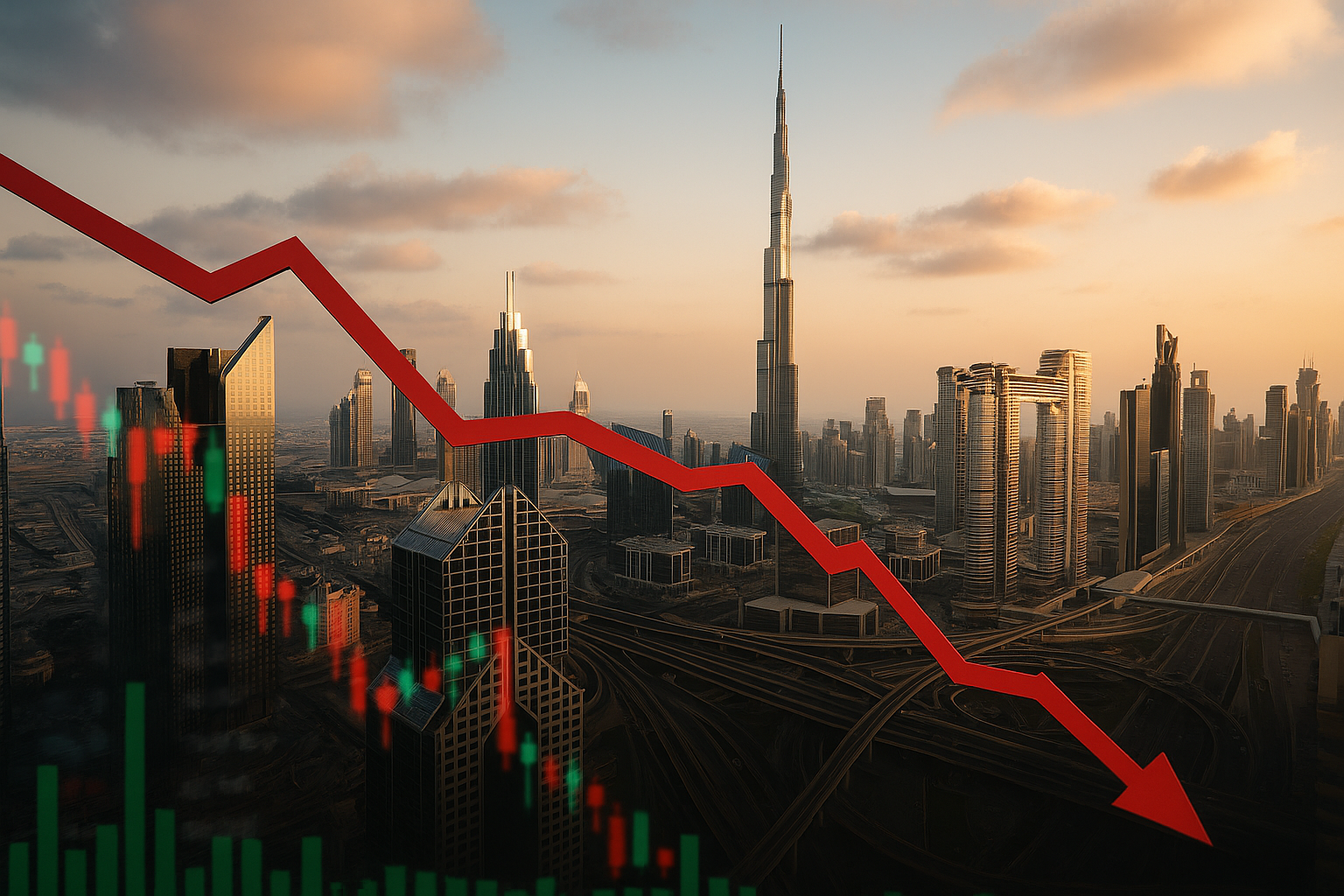
Emaar is often regarded as the symbol of Dubai’s real estate sector, and its stock price movements tend to be treated as a barometer of market sentiment.
However, focusing solely on Emaar provides only a partial view. Several other listed developers in the UAE play important roles in shaping the market, and their stock performance offers equally valuable insight into underlying trends.
Key publicly traded developers in the UAE include:
These companies vary in scale and specialization but collectively form the backbone of the development pipeline across the region.
Recent observations show that many of them have experienced stock price declines simultaneously — a signal that the market may be undergoing deeper structural adjustments.
Real estate development begins far upstream: land acquisition, planning, and construction all precede the sales and leasing activities visible to end-users.
When developers — the drivers of this upstream process — see weakening sentiment, it can eventually ripple through the entire market.
A broad pattern of stock declines may indicate concerns about oversupply, slowing demand, or shifting buyer sentiment.
This means that anecdotal evidence of strong sales or profitable resales may not capture the full picture. Market fundamentals often reveal themselves earlier in corporate performance and stock valuations.
Dubai’s property market often draws attention for its momentum and high-profile developments. But like any real estate market, it follows cycles — and upstream signals should not be ignored.
For those considering entry into the Dubai market, the following perspectives can be valuable:
A market surrounded by excitement requires an analytical mindset. Balanced, data-driven evaluation provides a more reliable foundation for decision-making.
Sorry, no posts matched your criteria.
Please feel free to contact us from the email form.

 Inquiries by email
 Bookmark
 Browsing history



 Bookmark
 Browsing history


