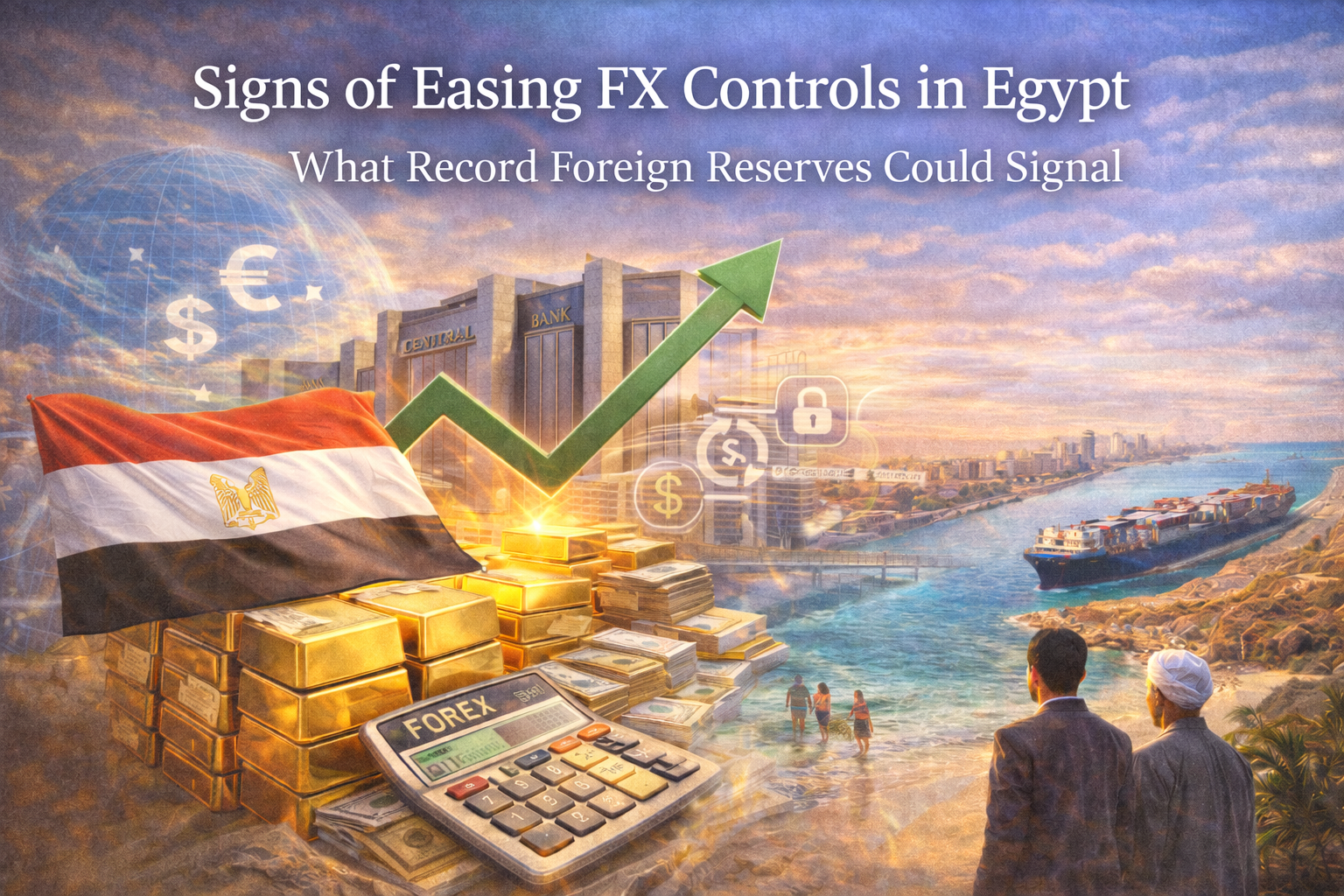
Foreign currency shortages have long been a structural challenge for Egypt.
Restrictions on imports and capital transfers have influenced corporate operations and investor sentiment.
Recently, however, rising foreign reserves have sparked discussion of potential easing in FX controls.
Foreign reserves reflect a country’s external payment capacity.
Recovery in tourism revenue, Suez Canal income, and capital inflows have strengthened Egypt’s external position.
Higher reserves typically support currency stability, smoother import payments, and improved sovereign credibility.
Gradual relaxation of FX controls could enhance capital mobility, lower entry barriers for foreign companies, and restore investor confidence.
For international investors, clarity and predictability in capital repatriation are critical factors.
External risks remain relevant, including commodity price volatility, geopolitical developments, and global interest rate trends.
Emerging markets remain sensitive to external shocks, and sustained stability requires prudent macroeconomic management.
Improved FX liquidity and policy flexibility may reinforce Egypt’s attractiveness in real estate, equity markets, and industrial investment.
For long-term investors, transparency in capital flows significantly reduces uncertainty.
Egypt’s improving foreign reserve position may mark the beginning of a new policy phase.
If easing measures prove sustainable, the country could transition toward a more open and stable financial environment.
The durability of this shift will ultimately determine its long-term economic impact.







Please feel free to contact us from the email form.

 Inquiries by email
 Bookmark
 Browsing history




 Bookmark
 Browsing history


